
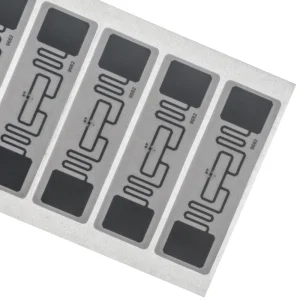
For years, RFID was talked about as the technology of the future.
That future has arrived.
Today, RFID is being used at enormous scale across logistics, retail, aviation, manufacturing, healthcare, automotive, and other industries. Some of the world’s largest companies have moved far beyond pilot projects and incorporated RFID into everyday, mission-critical operations.
And horticulture doesn’t need to start from scratch.
Arbre Tech has already built the platform to bring RFID, inventory management, and digital traceability together for horticultural businesses—and it has been commercially available for 10 years.
The technology is proven.
The infrastructure exists.
The horticulture-specific workflows have been built.
The question today isn’t whether RFID can work.
It’s how horticultural businesses can put it to work.
RFID Has Been Decades in the Making
The concepts behind radio-frequency identification stretch back decades, emerging from advances in radar and radio communications in the mid-20th century.
Commercial applications developed over the decades that followed, and by the early 2000s, RFID was attracting significant attention as a technology capable of transforming inventory management and supply-chain visibility.
But the RFID market of today is very different from the RFID market of 20 years ago.
Tags became smaller and more affordable.
Performance improved.
Industry standards matured.
Readers became more capable.
Cloud computing became ubiquitous.
Mobile devices transformed enterprise applications.
And the infrastructure necessary to turn RFID data into useful business information became dramatically more sophisticated.
RFID moved from experimentation to operational infrastructure.
The Last Decade Proved RFID at Massive Scale
The past 10 years provide some of the strongest evidence.
Major companies haven’t simply experimented with RFID. They’ve incorporated it into operations at extraordinary scale.
UPS: RFID Across a Global Logistics Network
UPS provides a powerful example of RFID moving from experimentation into large-scale operational infrastructure.
UPS has been deploying RFID as part of its Smart Package initiative to improve visibility into packages moving through its network and reduce the need for employees to manually scan packages.
The concept addresses one of the fundamental limitations of traditional barcode-based workflows: someone generally has to find and scan the barcode.
RFID can automate more of that identification process.
Instead of requiring an employee to individually scan every package at key points in the process, RFID can automatically identify tagged packages as they move through the operation.
For an organization moving enormous volumes of physical goods, eliminating manual touches can have tremendous operational implications.
And the underlying concept should sound familiar to anyone managing horticultural inventory.
Products move.
Locations change.
Orders need to be fulfilled.
Shipments need to be verified.
Inventory needs to be accurate.
The physical product might be a package instead of a plant, but the fundamental challenge is similar:
How do we efficiently maintain an accurate digital understanding of thousands or millions of physical items moving through an operation?
UPS isn’t waiting for RFID to become the technology of the future.
It’s using it to help operate one of the world’s largest logistics networks.
Delta Air Lines: Tracking More Than 100 Million Bags
Delta Air Lines provides another remarkable example.
In 2016, Delta announced a $50 million investment to deploy RFID baggage tracking across 344 stations around the world.
At the time, Delta was handling approximately 120 million checked bags annually.
Following deployment, Delta reported baggage tracking success of 99.9%.
Think about the operating environment involved.
Millions of physical objects moving between people, facilities, equipment, aircraft, airports, and destinations—all under extraordinary time pressure.
RFID demonstrated that it could operate reliably at that scale.
And Delta didn’t just use the information internally.
RFID-enabled baggage visibility also helped give passengers greater insight into where their bags were throughout their journey.
The physical object became digitally visible.
That’s one of the fundamental promises of RFID.
Walmart: RFID Keeps Expanding
Walmart’s history with RFID stretches back even further, with major supply-chain initiatives dating to the early 2000s.
But today’s Walmart RFID strategy isn’t simply a remnant of an old experiment.
RFID became deeply established in apparel and has expanded into additional merchandise categories, supported by detailed RFID specifications and approved-tag requirements for suppliers.
That continued expansion matters.
One of the world’s largest retailers doesn’t deploy identification technology across an enormous supplier network simply because the technology is interesting.
Inventory visibility matters.
Product identification matters.
On-shelf availability matters.
Supply-chain accuracy matters.
And the ability to identify large numbers of physical items without individually scanning every barcode can fundamentally change how inventory is managed.
For growers and other suppliers serving major retailers, RFID is increasingly becoming more than an internal efficiency opportunity.
It can also become part of doing business with the customer.
Decathlon: RFID on Every Product
Sporting-goods retailer Decathlon provides an especially useful example of what can happen when an organization takes item-level RFID to scale.
The company began experimenting with RFID in 2008 and expanded the technology across its processes in 2014.
By 2019, 100% of Decathlon products were being equipped with RFID tags during manufacturing.
By 2024, Decathlon reported nearly 50,000 RFID readers operating across its factories, warehouses, and stores around the world.
Think about what that represents.
Manufacturing.
Distribution.
Inventory.
Retail.
Checkout.
Traceability.
All connected through item-level identification.
RFID didn’t remain an innovation project at Decathlon.
It became infrastructure.
Tens of Billions of RFID Tags Tell the Bigger Story
Individual company deployments are compelling.
The overall market is even more revealing.
The RAIN Alliance reported that participating manufacturers shipped 52.8 billion RAIN RFID tag chips globally in 2024.
More than 50 billion in a single year.
RFID is being deployed across retail, logistics, manufacturing, healthcare, automotive, aviation, and other industries.
This isn’t a technology searching for a use case.
The use cases have already been proven.
Arbre Started Building for This Future 10 Years Ago
While some of the world’s largest companies were demonstrating what RFID could accomplish at scale, Arbre was tackling a different question:
How do we make these capabilities practical for horticulture?
That matters because implementing RFID in a nursery, greenhouse, grower, garden center, or horticultural supply chain isn’t simply a matter of purchasing RFID tags and readers.
The technology has to understand the business.
Plants and other horticultural products are produced, received, moved, counted, picked, staged, shipped, sold, and traced through environments that can be fundamentally different from traditional warehouses and retail stores.
Inventory may be spread across acres rather than aisles.
Products grow and change.
Inventory moves frequently.
Labels may be difficult to access.
Products that look nearly identical can represent different varieties, sizes, lots, ages, or customer commitments.
That’s why Arbre wasn’t built simply as an RFID reader application.
Over the past decade, Arbre has developed and commercially delivered a cloud platform that brings RFID together with the operational infrastructure necessary to actually use it.
We Already Built the Infrastructure
Behind every successful RFID implementation is a technology layer that customers rarely see.
Tags have to be encoded and associated with products.
Readers and mobile devices have to communicate with software.
Raw reads have to become meaningful inventory events.
Products need digital identities.
Locations need to be understood.
Duplicate reads need to be managed.
Inventory needs to be updated.
Users need practical workflows.
Information needs to be stored securely.
And data may need to move into accounting systems, ERP platforms, analytics tools, customer systems, or other applications.
Arbre has spent 10 years building and refining that infrastructure for this industry.
Our platform brings together capabilities across areas such as:
- Cloud-based inventory management
- RFID and barcode identification
- Item-level identification
- RFID encoding and printing
- Inventory counting and cycle counts
- Receiving
- Shipping and fulfillment
- Inventory movements and transfers
- Location management
- Product information
- Purchasing and sales workflows
- Production and operational workflows
- Digital traceability
- Reporting and analytics
- APIs and integrations
For some customers, Arbre can serve as the primary operational and inventory management platform, integrating externally with their accounting or financial system.
For others, Arbre can integrate with an existing ERP or enterprise platform and provide the specialized RFID, inventory, and traceability capabilities they need.
That infrastructure already exists.
Horticulture Doesn’t Need to Reinvent RFID
This is an important distinction.
A horticultural business evaluating RFID today isn’t standing where the market stood 20 years ago.
You don’t need to invent RFID.
You don’t need to prove that passive RFID can operate at scale.
You don’t need to develop an RFID platform from scratch.
And you don’t necessarily need to assemble tags, readers, middleware, databases, mobile applications, cloud infrastructure, inventory software, and integrations into a homegrown solution.
The broader market has already proven the technology.
Arbre has spent the past decade building the application of that technology for horticulture.
That allows the conversation to move forward.
Instead of asking:
“Does RFID work?”
We can ask:
“Where can RFID create measurable value in our operation?”
Plants Are Inventory Too
Horticulture is obviously different from logistics, aviation, or traditional retail.
A plant isn’t a UPS package.
It isn’t a suitcase.
And it isn’t a pair of shoes.
But from an information-management perspective, many of the challenges are remarkably similar.
Horticultural businesses manage large numbers of physical products.
Products move constantly.
Inventory is spread across large physical areas.
Products need to be counted.
Orders need to be picked.
Shipments need to be verified.
Receiving needs to be recorded.
Inventory discrepancies occur.
Individual products may need to be traced.
And the physical inventory needs to agree with the digital inventory.
These are exactly the kinds of problems RFID has demonstrated an ability to address.
Imagine Counting Plants Without Scanning Them One at a Time
This is where RFID becomes tangible.
Traditional barcodes generally require line-of-sight and individual scans.
RFID can allow many tagged items to be identified rapidly without locating and scanning each individual barcode.
That fundamentally changes the conversation around inventory.
Instead of asking:
“How often can we afford to count our inventory?”
You can begin asking:
“What could we do if accurate inventory were dramatically easier to obtain?”
More frequent cycle counts.
Better location visibility.
Faster receiving.
Improved order picking.
Shipping verification.
Item-level identification.
Production visibility.
Traceability.
Better information for sales and purchasing.
The value isn’t the RFID tag itself.
The value is what better information allows your business to do.
RFID Is Becoming More Relevant, Not Less
The next decade may make item-level identification even more important than the last.
Retailers want better inventory visibility.
Supply chains want more automation.
Customers and regulators increasingly expect traceability.
Businesses want better data.
And AI creates an entirely new reason to digitize physical operations.
AI can analyze enormous amounts of information—but first, that information has to exist.
If physical inventory isn’t accurately represented digitally, even the most sophisticated AI application is working with an incomplete picture of the business.
RFID can help close that gap.
Arbre provides the infrastructure to turn physical-world information into operational data—and can connect that data to the rest of the technology stack.
Horticulture Doesn’t Need to Prove RFID
The horticulture industry doesn’t need to prove that RFID works.
That experiment has already been run.
UPS is deploying RFID across one of the world’s largest logistics networks.
Delta has used it to track more than 100 million pieces of luggage annually.
Walmart continues expanding RFID throughout its massive retail supply chain.
Decathlon has implemented item-level RFID across manufacturing, distribution, and retail operations.
Tens of billions of RAIN RFID tag chips are shipped globally every year.
And for the past 10 years, Arbre Tech has been building and commercially delivering the infrastructure necessary to apply RFID, inventory management, and digital traceability to horticulture.
We’re not waiting for the technology to arrive.
We’re not proposing a research project.
And we’re not starting from a prototype.
We built it.
The Next Step Is Adoption
The opportunity now is for growers, nurseries, greenhouse operations, distributors, garden retailers, and other horticultural businesses to identify where this proven technology can generate the greatest return.
Start with inventory.
Start with receiving.
Start with production.
Start with order picking.
Start with shipping verification.
Start with retail compliance.
Start with traceability.
The starting point will be different for every operation.
But horticulture doesn’t need to wait for another industry to prove the technology.
And it doesn’t need to wait for someone to build the software infrastructure necessary to use it.
Both already exist.
After decades of RFID development, more than a decade of large-scale adoption across global industries, and 10 years of Arbre building specifically for this market, the conversation has changed.
It’s no longer:
“Is horticulture ready for RFID?”
It’s:
“Where should we start?”
At Arbre Tech, we’re ready to help answer that question.